
Meta Description: Choosing a diamond wedding band in Australia? Learn about ring fit, settings, metals, everyday comfort and pairing it with your engagement ring.
A wedding band can look perfect in a jewellery display and feel quite different after a full day on your finger. The difference often comes down to details that are easy to overlook: the height of the setting, the curve of the metal, the width of the band and how it sits beside an engagement ring.
For Australian couples considering lab grown diamond wedding bands, these practical details deserve as much attention as the stones themselves. A beautiful ring should also feel comfortable through ordinary routines, from working at a desk to carrying shopping bags. The most useful decisions often happen before the final design is chosen.
Start With the Engagement Ring, Not the Wedding Band
An engagement ring already has its own shape and proportions. Some have raised centre stones, while others sit close to the finger. These differences affect which wedding bands will fit comfortably alongside them.
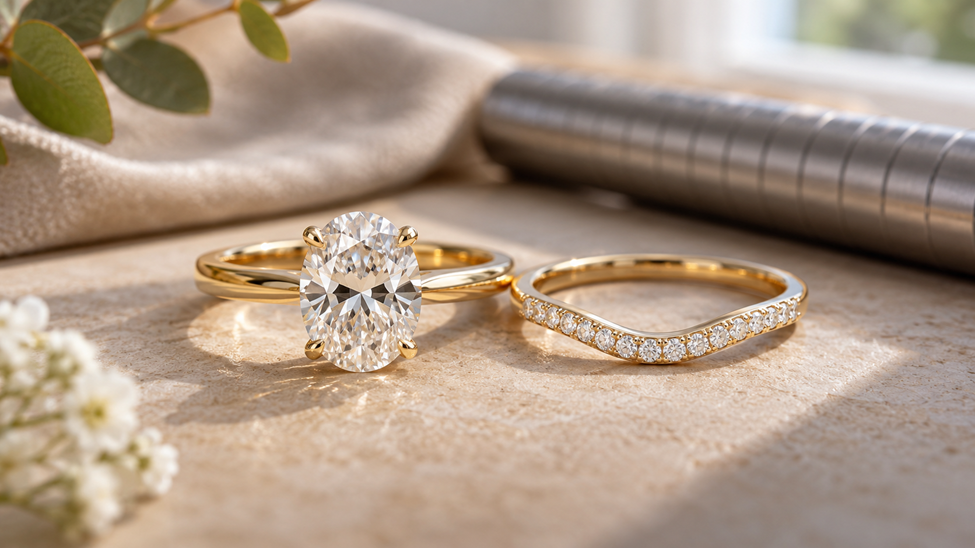
A classic solitaire with a raised setting may leave enough space for a straight wedding band to sit underneath. A low-set halo or larger oval diamond can create a gap when paired with a standard band. That gap is not necessarily a problem. Some people prefer a little space between their rings. Others want the two pieces to look like one continuous design.
The easiest way to judge the combination is to try both rings together. Pay attention to the side view, not just how they look from above. A jeweller can check whether the rings touch in places that could cause unnecessary wear over time.
Why Curved Wedding Bands Are Worth Considering
Straight bands are familiar, versatile and easy to wear on their own. They work particularly well with engagement rings that have enough clearance beneath the central setting.
Curved wedding bands offer another option. Their shaped edges follow the outline of an engagement ring, helping them sit closer together. A gently curved band may suit a round solitaire. A more pronounced contour might work better with a pear-shaped diamond or an unusual cluster setting.
However, the curve should be designed around the actual ring rather than selected from a photograph. Two engagement rings with similar-looking stones can have different settings. A band that fits one perfectly may sit awkwardly against the other.
Before ordering a shaped band, consider whether you also plan to wear it separately. A deep curve may look balanced beside an engagement ring but appear unusual when worn alone.
Diamond Origin Is Only Part of the Decision
Laboratory-grown diamonds are real diamonds produced in controlled manufacturing environments rather than formed naturally underground.
According to the Gemological Institute of America, they have essentially the same chemical, physical and optical properties as natural diamonds. Their origin differs, but their basic diamond characteristics are comparable.
This matters when considering a wedding band for regular use. Laboratory-grown diamonds offer the hardness associated with diamond, but that does not make the entire ring resistant to damage. Metal can become scratched. Small settings can loosen. Exposed edges may catch on clothing or other objects.
Australian shoppers researching lab diamonds Australia may come across specialist retailers such as Novita Diamonds. Beyond comparing the stones themselves, it is worth examining how the diamonds are held in place and how the finished band is constructed. A well-designed setting can make a considerable difference to everyday comfort and maintenance.
The Setting Changes How a Wedding Band Feels
Not every diamond wedding band feels the same against the skin. A pavé band has small diamonds set close together across part or all of its surface. This creates a delicate line of sparkle, although the quality and condition of the small settings remain important.
Channel-set designs hold diamonds between two continuous metal edges. The stones sit within a defined channel, which can provide a smoother outer profile.
Bezel settings use a metal rim around individual stones. They can be useful for people who prefer fewer exposed edges, although their appearance differs from traditional claw settings. The choice should reflect how the ring will actually be worn.
For instance, someone who frequently wears protective gloves may prefer a smoother band over a design with raised stones. A person who mainly wears their ring for social occasions might be more comfortable with a decorative setting.
If you’re considering lab grown diamonds in a wedding band, daily habits should be part of the decision. Comfort, practicality and maintenance matter just as much as appearance.
Wedding Ring Metals Need Careful Comparison
Gold and platinum remain familiar choices for engagement and wedding jewellery in Australia, but they behave differently during everyday wear.
Yellow, White and Rose Gold
Gold wedding rings are made from alloys that combine gold with other metals. Common jewellery options include 9ct, 14ct and 18ct gold.
The amount of pure gold differs between these options, as do the alloy compositions.
White gold is often finished with rhodium plating to create a bright white appearance. That surface finish can wear over time and may need refreshing.
Yellow gold has a warmer colour, while rose gold gets its pinkish tone from its alloy composition, typically involving copper.
Platinum
Platinum is naturally white and does not require rhodium plating to maintain a white appearance. It develops surface marks and a patina with wear, which can be professionally refinished.
When pairing two rings, matching the metal may help achieve a consistent appearance. However, different alloys and surface finishes can still age differently.
If you prefer mixed metals, ask a jeweller to inspect how the two rings make contact, particularly when one has exposed diamond edges.
Ring Width Can Affect the Fit
A wider band often feels different from a narrow one, even when both are labelled with the same ring size.
This becomes especially important when an engagement ring and wedding band are worn together. The combined width changes how much of the finger the rings cover.
A narrow band may feel light and unobtrusive. A broader design can create a more substantial appearance but may also feel tighter.
The GIA’s professional ring-sizing guidance identifies wider rings and bridal sets as designs that require special consideration when determining fit.
Finger size can also fluctuate with temperature and daily activity. Trying rings on when your hands are unusually cold or swollen may give a misleading impression.
A proper fitting should consider whether the ring passes comfortably over the knuckle while remaining secure on the finger.
It is also sensible to ask whether the design can be resized later. Full eternity bands, with diamonds continuing around the entire circumference, can be more difficult to alter than plain or partially stone-set bands.
The Beauty of a Diamond Band Should Not Hide Its Maintenance Needs
Diamonds are hard, but jewellery still needs attention. Settings can wear with repeated contact, and an engagement ring worn beside a diamond wedding band may experience friction at the points where they meet.
Regularly check for changes in the ring’s appearance or feel. A stone that moves, a damaged claw or a newly rough edge deserves professional inspection.
For routine cleaning, warm water, mild soap and a soft brush may be suitable for many diamond rings, provided the jewellery is in good condition and the jeweller has confirmed the method is appropriate.
Avoid harsh household chemicals, particularly those that can affect certain metals and finishes.
GIA recommends regular professional checks of diamond settings because loose or worn prongs can put stones at risk. It is also worth having a safe place to store rings when doing activities that could damage them.
Compare the Entire Ring Before Comparing Prices
A diamond’s size can influence a buyer’s first impression, but the complete ring deserves closer examination. Before purchasing, ask for a clear breakdown of what is included in the quoted price.
Check the diamond’s origin, any available grading documentation, metal specifications, design details and whether resizing or future inspections are included.
Two rings with similar-sized stones may have different band weights, construction methods and maintenance requirements.
Be cautious about vague environmental claims as well. Laboratory production does not automatically establish that a diamond is environmentally superior in every respect. Any sustainability claim should have evidence explaining what is being measured.
In Australia, the ACCC requires businesses to avoid misleading product claims. Consumer guarantees also apply to eligible jewellery purchases, regardless of additional retailer warranties.
For online purchases, read the retailer’s delivery, returns, resizing and after-sales terms before ordering. Custom-made jewellery can involve different change-of-mind arrangements, although statutory consumer rights still apply.
Give Yourself Time to Make Adjustments
Wedding planning has enough deadlines without discovering at the last moment that a ring needs resizing or alteration.
A made-to-order band may require additional time for manufacturing, fitting and any final changes. Custom curved designs can involve extra measurements or design approval.
Trying the completed ring with the engagement ring before the wedding also provides a chance to identify small comfort issues.
Wear the pair briefly during a normal day, where practical and permitted by the jeweller, to see whether the bands rotate, pinch or catch. If something feels wrong, it is better to address it early.
A wedding band does not need to be elaborate to feel special. The right proportions, comfortable fit and carefully considered setting can make a straightforward design genuinely satisfying to wear.

Ava is a passionate business writer at eBusinessName Australia, sharing practical insights on startups, branding, and online business growth. She enjoys helping entrepreneurs build strong digital identities with smart business strategies and creative ideas.